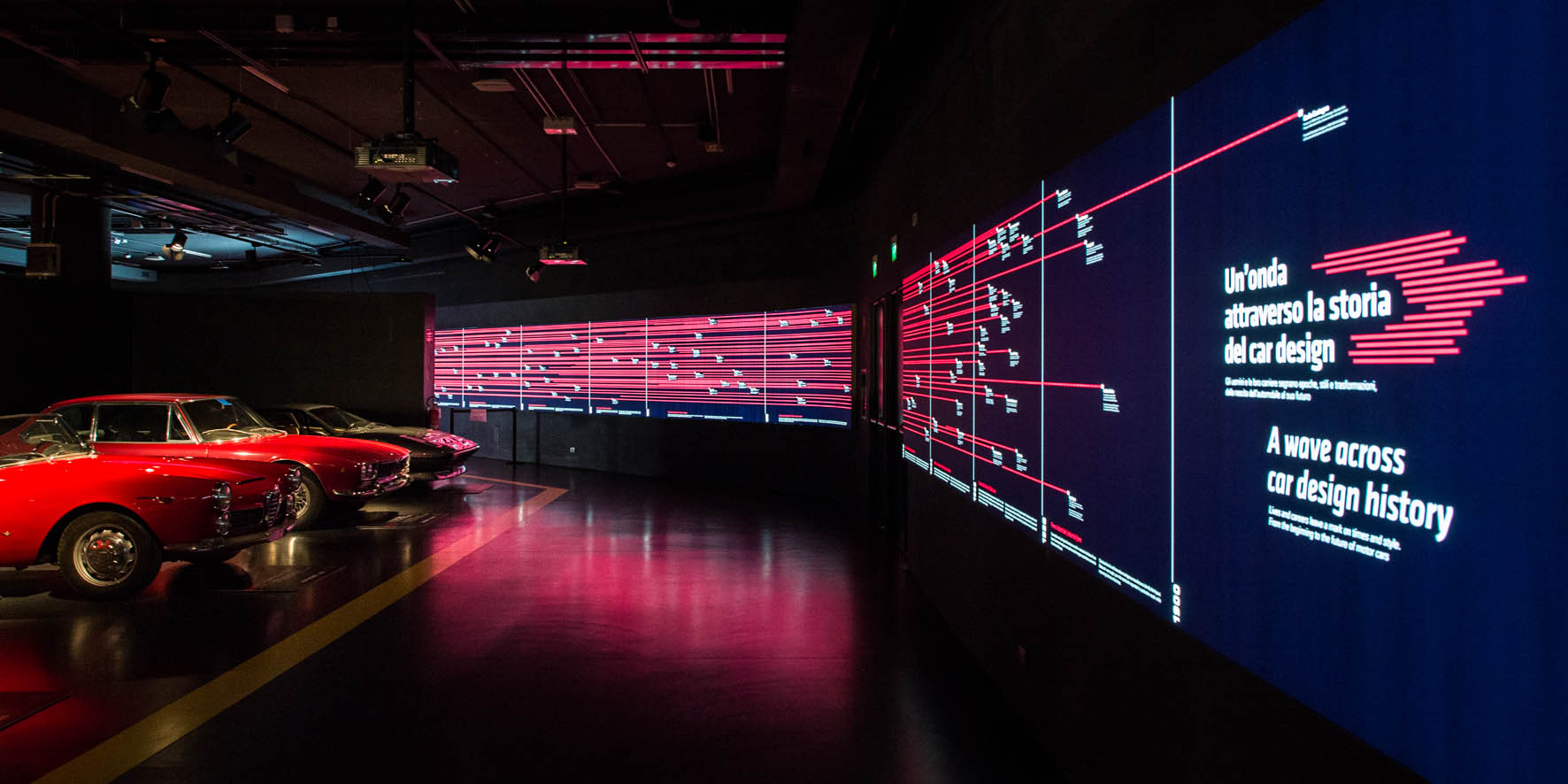
Among the many roles involved in car design, the Museum wants to pay homage to the designers, to the creative talents, and to all those who work, create, and innovate – and are often overlooked.
Some of them have become famous, and maybe set up their own company. Others have contributed to the birth and development of the “big names” in car design.
|
1900-1920 INDUSTRIAL FORM
Cars break the link with horse-drawn carriages as manufacturers identify their layout. Bodywork was caught up in this trend and responded to production needs while expressing fashions of its times. |
|
|
Bertone Giovanni |
Began with horse-drawn carriages after an experience at Diatto. Moved on to cars after World War I. |
|
Castagna Carlo |
Founded Carrozzeria Castagna in 1849. With the beginning of the car era he became one of the best-known names. |
|
Castagna Ercole |
Guided Carrozzeria towards the great successes in the Twenties and Thirties, becoming a right-hand man at Alfa Romeo, among others. |
|
Earl Harley |
Considered the father of car design: for GM (creating the Art and Color Section) he invented the profession, method and techniques. Nothing was to be the same after this. |
|
Farina Battista |
After Stabilimenti Farina, from 1930 he was one of the creators of the “Italian Style”. Designer of an endless number of Pininfarina masterpieces. |
|
Zagato Ugo |
After an apprenticeship in the workshop he founded his own business to produce lightweight metallic bodywork. Success came with the Alfa Romeo models. |
|
1920-1935 CLASSIC CARS
Cars take on a definitive form: the “torpedo-shaped” body becomes the most classic interpretation. While the USA focuses on the mass market, European and Italian coachbuilders achieve an extremely high quality level much appreciated throughout the world. |
|
|
Bertoni Flaminio |
One of the all-time greats: challenged the rules of car design with a sculptor’s approach: Citroen Traction Avant and the immortal DS. |
|
Bianchi Anderloni Felice |
Founded Touring and took over the Weymann patent, but the real revolution was the Superleggera method: it changed the form of cars. |
|
Boano Mario Felice |
Professionally he developed alongside Battista Farina, then gave the Ghia a new lease of life: He was one of the creators of the Fiat Style Centre. |
|
Buehrig Gordon |
Before joining Ford in 1949 he designed many US cars, including the Duesenberg, Cord, Auburn and Studebaker. |
|
Bugatti Jean |
Creator of the French company’s timeless forms: together with his father’s refined mechanicals he became a legend. |
|
Exner Virgil |
Made his debut with Harley Earl, worked with Raymond Loewy and at Studebaker. Really made his name at Chrysler: he was the creator of the Forward Look. |
|
Frua Pietro |
Aged only 22 he was Director of Styling at Stabilimenti Farina. Set up his own company in 1937. |
|
Geiger Friedrich |
A long career at Mercedes, sculpturing the lines of the 500K, Gullwing and on to the Pagoda. |
|
Giacosa Dante |
Engineer rather than designer. But he also worked on the styling, starting with the 500 for which he was awarded the Compasso d’Oro. |
|
Hershey Frank |
Pupil of Harley Earl at GM, he above all worked on foreign brands: Opel and Holden. Later worked at Packard and Ford. |
|
Issigonis Alec |
In a period that saw the fusion of the form and function of passenger cars he designed a masterpiece: the Mini. |
|
Loewy Raymond |
Designer of world-famous products, initially trains and then cars, above all Studebakers. |
|
Martinengo Franco |
Formerly Director of Stabilimenti Farina, in 1952 he followed Battista to Pinin Farina, where he remained until 1976. |
|
Mitchell Bill |
Discovered by Harley Earl, and guided the switch to simpler and cleaner lines. |
|
Rapi Luigi Fabio |
Designer, he worked on bodywork and designed the models at Isotta Fraschini. Then worked at Fiat in the Giacosa era and later at Simca and Autobianchi. |
|
Revelli di Beaumont Mario |
Not only a designer but also an expert, theorist and teacher of this art. Joined Fiat in 1929 and then worked at Pininfarina, GM and Simca. |
|
Tjaarda John |
Joop “Jan” Tjaarda van Sterkenburg went to the USA in 1923: he created the futuristic concept that was to lead to the Lincoln Zephyr. |
|
Turenne Gregoire Eugene |
His first contact with design was in a shipyard, after which he joined GM. Shortly afterwards he followed Edsel Ford, with whom he designed many successes. |
|
1935-1945 AERODYNAMIC INSPIRATION
Aerodynamics becomes a pressing need. It has now become the inspiration, motivation and prime aim of the coachbuilders’ art. Tapered lines, flowing surfaces and great care over details: it marks the beginning of a new era. |
|
|
Bertone Nuccio |
During World War II he took over from his father, making the coachbuilder brand one of the world leaders. He launched Scaglione, Giugiaro and Gandini. |
|
Bianchi Anderloni Carlo Felice |
Took over from his father in 1948. But the world had changed and Touring failed to convert and become a full-scale manufacturer. |
|
Charbonneaux Philippe |
GM, Citroen and Delage. But his name will be above all linked to Renault. And to many other items today seen in major museums. |
|
Goertz Albrecht Graf |
Made his debut in car design after a chance meeting with Raymond Loewy. Then he met up with Max Hoffman and BMW. |
|
Michelotti Giovanni |
From his early days at Stabilimenti Farina, in 1946 he was one of the first to strike out alone. He designed over 1,200 cars, among his “clients”, BMW and Triumph. |
|
Oros Joe |
Pupil of Earl at GM, followed George Walker to Ford where he was a designer for 21 years. |
|
Savonuzzi Giovanni |
Although a technician he left his mark on some of the most significant bodywork designed at Cisitalia, Ghia, Chrysler and Fiat. |
|
Teague Richard |
His CV includes GM, Packard and Chrysler although his name is above all associated with AMC: he was the designer of the first Jeep Cherokees. |
|
Thatcher Elizabeth Anna |
Wife of Joe Oros, she was hired by Hudson in 1939, making history as the first female car designer in the USA. |
|
1945-1950 SCULPTURE IN MOTION
Quality European coachbuilding clashes with the needs of industrial production. Now forms are plastic, bodywork is no longer just a covering but a sculpture in motion. The forward look catches the fancy in the USA, with its fins and chromed details. |
|
|
Brovarone Aldo |
Great designer, he began with Dusio’s Cisitalia and then became a mainstay of Pininfarina, also creating the Dino 246. |
|
Engel Elwood |
Student of Earl, after the War he followed Walker to Ford. From 1961 to 1973 he was head of styling at Chrysler. |
|
Pininfarina Sergio |
Member of the family company since 1950. Internationally recognised as the prestigious head of Pininfarina since 1966. |
|
Segre Luigi |
He joined Ghia in 1950 and in 1953 had the top job, developing both growth and establishing the partnership with Chrysler. |
|
Sessano Aldo |
At Fiat in 1950 (advertising) and then joined the Style Centre in 1956. Founded Open Design, working with many international brands. |
|
Vignale Alfredo |
Trained “in the field” as a panel beater working with De Gregori and Farina. Then in 1946 he founded the coachbuilder company in his own name. |
|
1950-1955 PRESSED SHEET-METAL
Production lines require curved, essential surfaces while chromed features become all the rage: the three volume saloon is a status symbol, with its rounded lines, limited glass surfaces and grille design that encompasses a brand’s DNA. |
|
|
Ash David L. |
A career in Ford Motor Company, of which he became Chief Stylist, and played a leading role in design of the Mustang. |
|
Boano Gianpaolo |
Developed professionally alongside his father and in 1959 worked with Dante Giacosa as head of the Fiat Style Centre. |
|
Bonetto Rodolfo |
Designer, not only of cars, from 1951 worked with Pininfarina, then Vignale, Boneschi, Viotti. But also at the Fiat Style Centre from 1977. |
|
Bracq Paul |
Began at Citroen in the Charbonneaux era, then on to Mercedes, BMW and Peugeot. But also traced the lines of the TGV. |
|
Jordan Charles |
He began his career at GM in the Fifties and ended up at top level. |
|
Luthe Claus |
For Fiat Germany worked on design of the grille for the Nuova 500, then at NSU with the Ro 80, later at Audi and BMW. |
|
Sacco Bruno |
Worked with Ghia, then went on to become the father of all Mercedes cars and their unmistakable design from 1975 to 1999. |
|
Scaglione Franco |
First and foremost, aerodynamics: Pinin Farina and Michelotti then masterpieces with Bertone and working freelance. |
|
Tjaarda Tom |
He was noted by Luigi Segre who brought him to Ghia. Later, his masterpieces with Pininfarina, OSI, again Ghia, the Fiat Style Centre and lastly as a freelance. |
|
1955-1965 RETURN OF EDGES
Taut lines and ample glass surfaces: production techniques improve and enable car designers to give full rein to their creativity. They concentrate increasingly on liveability and functionality. |
|
|
Bahnsen Uwe |
German, for many years he was the leading light of Ford Europe, developing the genealogy of the Taunus, Capri and Escort. |
|
Cherry Wayne |
Worked at GM on the Camaro, then in Europe: Opel and Vauxhall. In 1991 returned to Detroit and the Pontiac, Cadillac and Hummer. |
|
Fioravanti Leonardo |
Designed some of the most outstanding Ferrari models for Pininfarina. Set up his own company in 1987. |
|
Gandini Marcello |
Designer of great masterpieces and revolutionary cars at Bertone, then went freelance: one of the all-time greats. |
|
Giugiaro Giorgetto |
The maestro of car design who started out at Fiat with Giacosa at the age of only 17, then masterpieces at Bertone and Ghia. He founded Italdesign in 1968. In 1999 he was elected Car Designer of the Century. |
|
Juchet Gaston |
Although never in the limelight he was the designer of all Renault models between Renault 1965 and 1990. And of many revolutionary concepts. |
|
Manzù (Manzoni) Pio |
Industrial designer and theorist of the relationship between form and function, he worked on cars with NSU and above all with Fiat. |
|
Martin Paolo |
He began with Michelotti, but already at 24 he was Director of the Pininfarina Style Centre. Later with Ghia and then from 1976 freelance. |
|
Opron Robert |
Pupil of Flaminio Bertoni, he has his own unmistakable style. Left the company after the merger with Peugeot and joined Renault. |
|
Pfeiffer Peter |
Began at Ford but shortly after moved to Mercedes where he remained until pension age. He took over from Bruno Sacco in 1999. |
|
Porsche, Ferdinand Alexander |
Son of “Ferry”, among other cars he designed the 901, that is, the first 911. In addition to cars he was to be the father of Porsche Design. |
|
Sapino Filippo |
Apart from a brief yet prestigious period at Pininfarina he dedicated his career to Ghia, including after the acquisition by Ford. |
|
Sartorelli Sergio |
He began at Ghia in the golden period, then moved to OSI and the “Future Studies” at the Fiat Style Centre where he studied new car forms up to 1984. |
|
Shinoda Larry |
Made his debut at Ford and then studied under Bill Mitchell at GM. Among his masterpieces, the Sting Ray and Mako Shark Corvettes. |
|
Spada Ercole |
With Zagato in 1960 and Ghia in 1970. He then worked at BMW, IDEA Institute and with his son founded Spadaconcept. |
|
1965-1970 WEDGE-SHAPED LINE
The revolution begins with the centrally mounted engine. The bonnet is shorter, the grille is lower and muscular features disappear. Cars no longer have a sinuous, enticing look but instead resemble sharp blades. |
|
|
Cressoni Ermanno |
Father of the sleek Alfa Romeo’s of the Seventies and Eighties, in 1986 followed the brand and went on to head up the Fiat Style Centre. |
|
Lagaay Harm |
Simca, Porsche, Ford and BMW. Then back to Porsche where he reinvented the entire range. |
|
Le Quement Patrick |
He really made his mark at Renault where he had the courage to innovate, amaze and revolutionise design. |
|
Zagato Elio |
Inherited the coachbuilder company, already a successful business, from his father and continued in the family tradition. |
|
1970-1980 AN INTERNATIONAL AIR
The hatchback makes its mark and compact cars become the universal standard. New forms and a new approach makes cars functional and essential, popular and iconic. Traditional graphic features are enhanced – those that don’t have them, create them. |
|
|
Callum Ian |
Ford, TWR. Then Aston Martin and Jaguar: with his lines he relaunched Britain’s best-known brands. |
|
Fukuichi, Tokuo |
Worked in the shadows for many years and then in 2013 became head of Toyota design. |
|
Fumia Enrico |
Child prodigy of car design, joined Pininfarina in 1976. In 1991 became Director of Styling at Lancia before founding MasterDesign. |
|
Gale Tom |
Pioneer of the “cab forward” at Chrysler but also father of the Prowler and Viper. |
|
Giolito Roberto |
A design career at Fiat that ended at the top. From the Multipla, on exhibition at the MoMa, to the great success of the 500. |
|
Matano Tom |
Various experiences and a long career at Mazda, starting in the USA and later in Japan. He then began an academic career. |
|
Mays J |
Except for a parenthesis at BMW, he made his mark at Audi and VW. Then Ford, which at the time included Jaguar, Aston Martin, Volvo and Land Rover. |
|
McGovern, Gerry |
All his life travelling between Usa and GB; now Design Director for Land Rover and Range Rover. |
|
Robinson Mike |
An American fascinated with Italian design who worked at Ghia but above all at Fiat. In 2009 he became Design Director at Bertone. |
|
Schreyer Peter |
He designed the first TT at Audi, and not only this. At Kia he gave the brand a new identity that earned him the leader ship of the entire Group. |
|
Smith Martin |
Encouraged by Issigonis he studied at the Royal College of Art, beginning in 1973 at Porsche, then on to Audi and later, Opel. With Ford Europe since 2004. |
|
Welburn Ed |
Like Harley Earl and Bill Mitchell before him he became head of design at General Motors. |
|
1980-1985 IN THE NAME OF EFFICIENCY
Consumption and emissions become hot issues and cars fall in line. Performance takes second place as design focuses on the issue of efficiency. Design must come to terms with aerodynamics and reflect the new trends. |
|
|
Bangle Chris |
Born in the USA and Italian by choice, he started out at Opel, matured at Fiat and went on to become the charismatic and revolutionary designer of BMW styling. |
|
Callum Moray |
An early career at Chrysler, PSA and Ghia, Ford. He was Mazda design director and then in 2006 went back to Ford and North American brands. |
|
Coco Donato |
From Italy’s Puglia region, studied and worked abroad, giving a new face to Citroen. Returned to Italy to head up the Ferrari Style Centre then in 2010 joined Lotus. |
|
De Silva Walter |
Fiat and Idea Institute, then the relaunch of Alfa Romeo, starting exactly from design. In 1999 joined VW and from 2007 has been head of styling for the entire Group. |
|
Pininfarina Andrea |
Joined Pininfarina in 1983 and became Chairman. A much admired and successful manager, he died in a road accident in 2008. |
|
Pininfarina Paolo |
After experiences in the USA and Japan he joined the company in 1982 and became Chairman in 2008. |
|
Ploué Jean-Pierre |
Began at Renault where he designed the Twingo and after several different experiences relaunched the Citroen brand. |
|
Stevens Peter |
One of the best-known British designers, he worked with Jaguar, BMW, Lotus, Subaru, MG. Famous for having designed the Lotus Esprit and Elan |
|
Stola Alfredo |
He inherited a family business founded in 1919, worked on over 250 styling models and in 2005 founded Studiotorino. |
|
1985-1990 CRISIS OF IDENTITY
The search for efficiency and being “politically correct” overwhelms emotional content. Brands are only recognisable by their names and cars become mere tools. As for supercars, exactly the opposite is true: extreme solutions and lines dominate the car shows. |
|
|
Bischoff, Klaus |
His career in VW began with an internship and he has gone on to become Executive Director of the brand’s design. |
|
Donckerwolke Luc |
After starting out at Peugeot, the VW Group: Skoda, Audi and Lamborghini. Then Seat, Bentley and Volkswagen itself. |
|
Egger Wolfgang |
German, studied in Italy and in 1989 joined Alfa Romeo that years later he headed up. From 2007 he has been head of Audi design. |
|
Filippini Fabio |
Developed professionally at Renault, with a parenthesis at VW, then head of design at Pininfarina. |
|
Fisker Henrik |
Began at BMW and continued at Ford, where he headed up the relaunch of Aston Martin. In 2004 founded his own brand, then worked with Tesla. |
|
Giugiaro Fabrizio |
Joined the family company, he is a designer and manager, working on cars and many other items. |
|
Norihiko Harada |
Japanese, he is chief designer at Zagato, a great name in Italian bodywork design that still today focuses on “made-to-measure” models. |
|
Okuyama Ken |
Worked on the NSX project, then joined GM, Porsche was Design Director at Pininfarina before starting his own company. |
|
Stephenson Frank |
A Pasadena graduate, he previously worked at BMW, Ferrari and Maserati. Current he is head of the McLaren Style Centre. |
|
Tencone Marco |
From Fumia’s Pininfarina he moved on to Lancia. Then came management posts at Maserati and other Fiat Group cars. |
|
Van den Acker Laurens |
At Audi he became a pupil of J Mays and later followed him to Ford. Then he became chief stylist at Mazda and, in 2009, Renault. |
|
Zagato Andrea |
He made the famous brand an atelier for design and production of limited series models, assisted by Marella Rivolta, who followed in her father’s footsteps. |
|
Zapatinas Andreas |
Greek, he studied in the USA and worked at Pininfarina, Fiat and Alfa Romeo after De’ Silva’s time, then at BMW and Subaru up to 2006. |
|
1990-1995 DAWN OF A NEW ERA
The future has deep roots. Style centres stop to look back at the past and change route. Design must express emotions and reflect the brand’s values. |
|
|
Acampora Gioacchino |
Since 1994, he’s owner of Castagna, an historic Milanese coachbuilder. |
|
Albaisa Alfonso |
25 years at Nissan. Now Design Director at Infiniti, its premium brand. |
|
Biasio Giuliano |
A top career at Bertone, then co-founder of Torino Design. |
|
Camardella Pietro |
Ferrari, Fiat and Lancia his endeavours; then at the Advanced Design of the Centro Ricerche Fiat. |
|
Hildebrand, Gert |
From Opel to BMW, and then in China, as Head Design of Qoros. |
|
Hooydonk Adrian |
<
 
|