
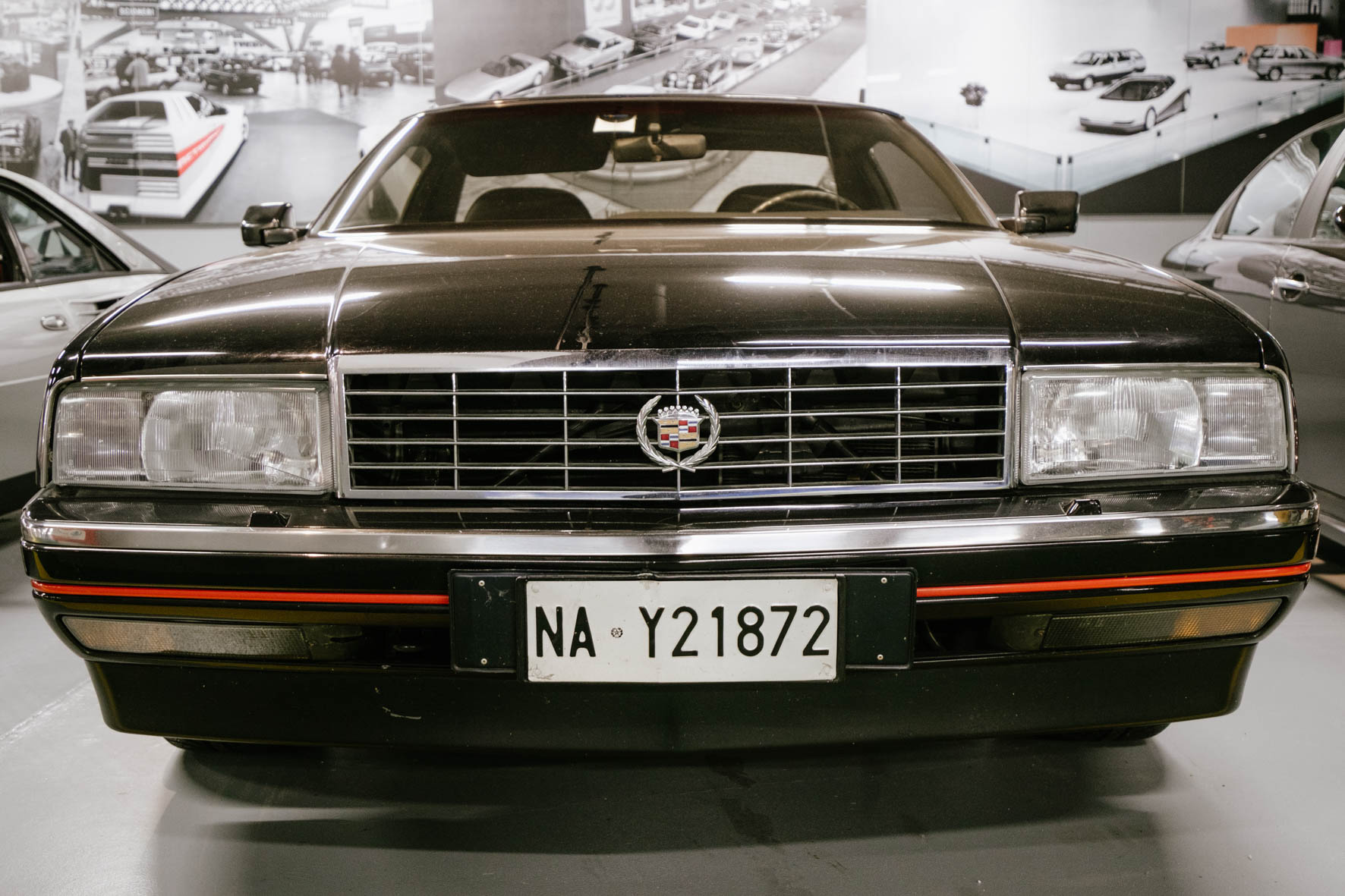
Battista Farina had already “clothed” a Cadillac, a V16 for a Maharaja, back in 1931; then in 1959, on the basis of an American design, he supplied GM with 200 Cadillac Broughams. But it was only in September 1983 that the historic agreement between Pininfarina and General Motors was signed for the production of 8,000 Allanté’s a year. What kind of a vehicle did the agreement have in mind? A car that had to be American (in fact the platform and engine came from the Cadillac Eldorado) but with a clearly European design, a Pininfarina at first glance. Elegant but solid, refined but robust, American but basic and clean, suitable for a middle-aged clientèle (55-60, the only age group that could afford to buy it), reliable but with details that made it unique: for example, the appearance of electronics. Surprising was not so much the liquid crystal optoelectronic instrumentation, or the 90.7 kbytes of total computing power of the various processors (a value that would be considered laughable today) as the adoption of two computers able to oversee the management of the mechanicals and the electric system. The use of these systems was made possible by the “Multiplex” network which is standard in cars today but which made its automotive debut in the Allanté.

For Pininfarina this all meant a tremendous effort: eight thousand shells to be bodied out and painted involved the building of a new factory at San Giorgio Canavese, a new paint plant, an enormous investment in human resources and the organisation of what would make the Allanté the “Cadillac that flew in from the sky”: namely a Detroit-Turin air shuttle where each outbound trip brought Pininfarina 56 platforms with the return taking the parent company the same number of full-bodied cars.

In the first two years of production (1987-1988), 6000 Allanté’s were marketed at a price of 50,000 dollars: it was the most expensive car in the Cadillac range. However, despite the introduction of ever greater refinements and improvements, the car failed to take off and the planned 7500 units per annum remained a pipe dream. In 1992 production hit an all-time low of just 1900. The last year of production was 1993 when many retailers sold it below cost.

The commercial failure of this very special Cadillac can be attributed to the reliability problems encountered in the early versions which irreparably undermined the model’s image. In spite of this, it was the Allanté that set the tone for future Cadillac production, particularly as regards its aesthetic profile, bringing the American brand enormous benefits in terms of image and market share.
A total of 21,000 Cadillac Allanté’s were manufactured.
